
Unexpected landscapes
surprises during field work in California and Nebraska

Before I set off on my big trip in May, I had a committee meeting at the end of April. One of my committee members, Scott, asked me to write or think about what is surprising me in my research. This was a timely prompt, reminding me to stay open and attentive throughout my upcoming field work travels.
Today, I’ll share some of those surprises, mostly related to the new landscapes I encountered, so I can save the research surprises for you later.


Bodega Marine Lab and Reserve
North of the angular Point Reyes National Seashore in California, where it looks like someone took an ice cream scoop to the coastline, is the little town of Bodega Bay. Perhaps this place rings a bell for you: maybe you are already familiar with the Pacific coast, or maybe you know that Hitchcock’s The Birds was filmed there1. Either way, this was a new part of California for me, and I enjoyed exploring Bodega Marine Reserve as well as the surrounding area.
My first two days in Bodega had beautiful weather, allowing for some hiking on the reserve and state park lands. These sunny days were contrasted by two days of classic coastal fog. The fog itself wasn’t unexpected in that part of California, considering the cool ocean temperatures and wind direction, but what did surprise me was how the fog was so dense and delineated.
One morning I was passing by the marina, drenched in fog, and stopped to take a picture. I found myself standing on the fishing pier for quite some time, watching a cormorant fishing for it’s breakfast as the fog rolled in even more, so much so that I couldn’t even see the channel markers just outside of the marina.
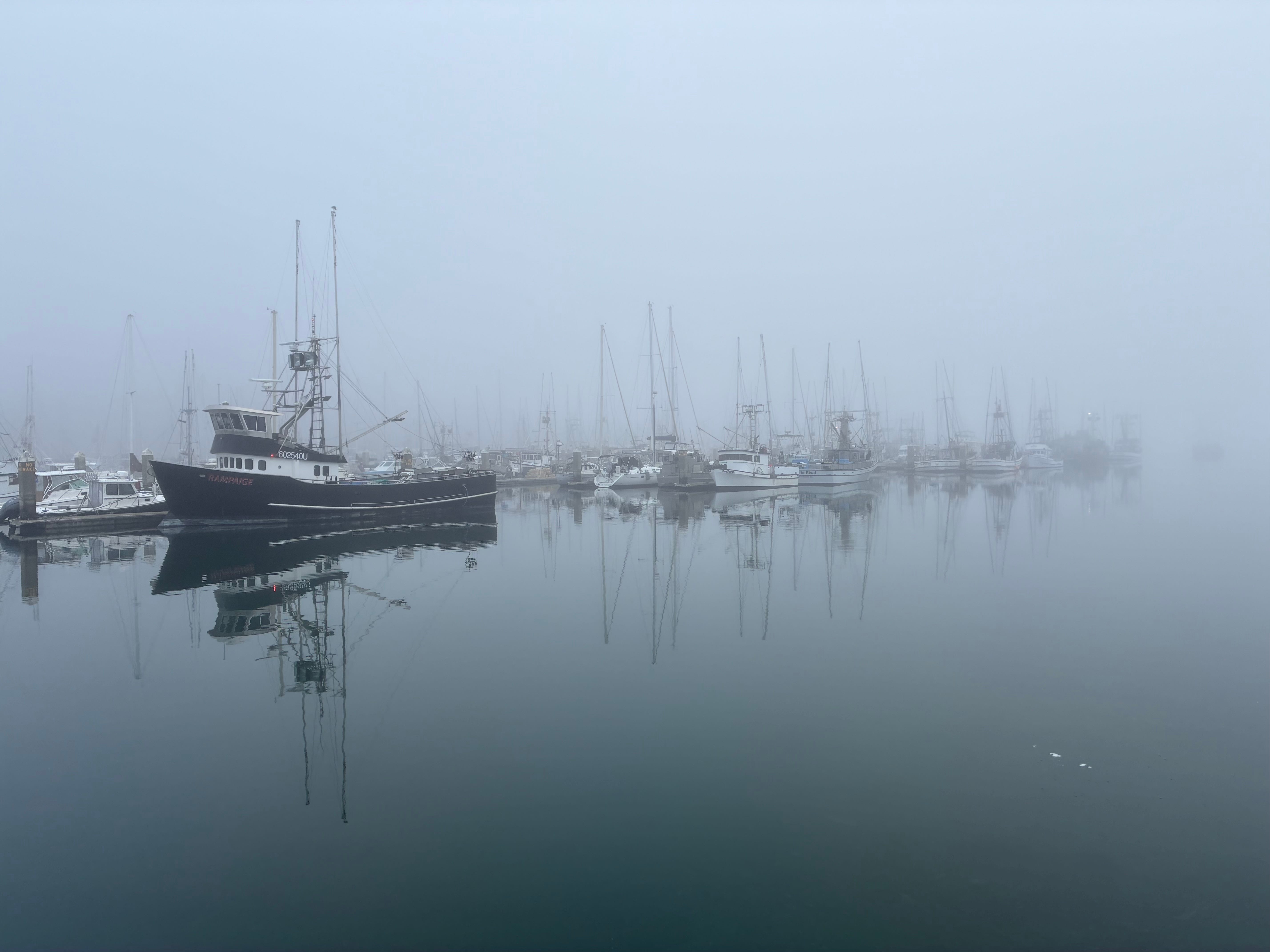
When I drove inland, however, as soon as you cross over the hills that run parallel to the coast, the fog dissipates. Without the cool upwelling water and the sea breeze, the fog can’t match the heat of the California sun. Heading back towards the shore, you are faced with a massive wall, visible just over the hills, with tendrils of fog seeping down the hillsides. The zone of fog was distinct and imposing. It was such a stark difference, I understood why researchers at the marine lab study fog or the affects of fog on the coastal ecosystem.


Cedar Point Biological Station
After a brief but delightful weekend stop in Colorado with some camp friends2, I drove 3+ hours from Denver to Ogallala, Nebraska. In looking more closely at the map, I realized I had never been to Nebraska before. When I’ve driven cross-country, I went through Kansas and South Dakota, skipping the state in between, which—of course—is Nebraska. New state unlocked!
Like many people not from the Midwest, I had some preconceived notions of what Nebraska would be like, based on the states around it. Yes, there were definitely corn fields and cow pastures, but also some very unexpected features of the landscape. For example, prior to researching Cedar Point Biological Station for this project, I did not know that there were lakes in Nebraska. I thought it was mostly fields, maybe some ponds, and over-drawn aquifers. In the 1930s, Kingsley Dam was built on the North Platte River. This created a small body of water, Ogallala Lake, on the east side of the dam, and a huge body of water, Lake McConaughy, on the west side of the dam. Lake Mac, as it is locally known, is 22 miles long and is one of the most popular tourism and recreation sites in the state. So, because of this reservoir, I saw the most incongruent, absurd sights driving through the rolling ag land, such as a sign for scuba lessons and a sailboat in a corn field.
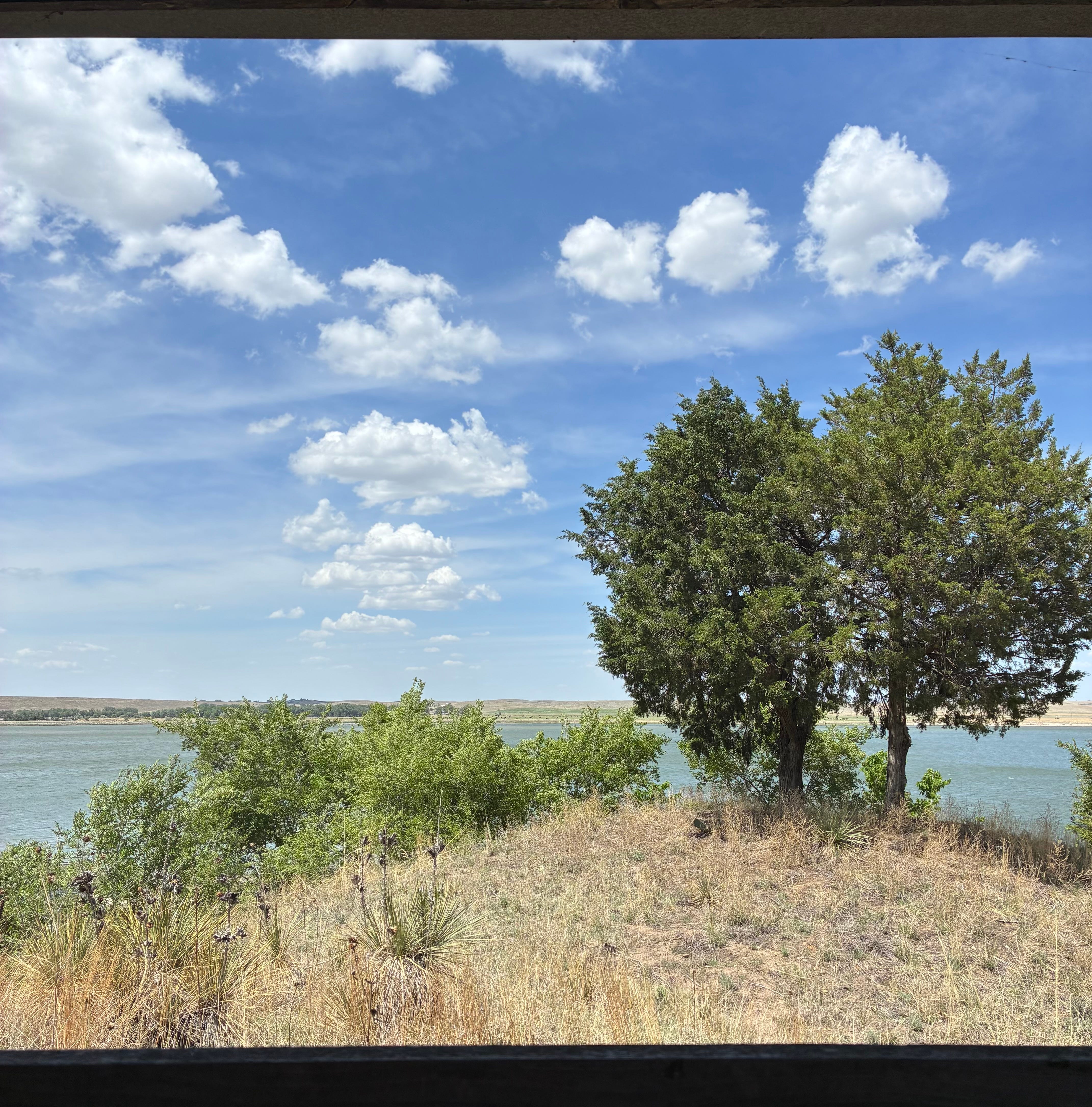
Perhaps even more surprising than the presence of water around the field station was the presence of plants and animals I did not associate with the prairie. Spending time hiking on the trails of Cedar Point, I realized that maybe the definition of “prairie” that I had in my head from science classes was too narrow for what “prairie” actually is. I was told the habitat type around the field station was “mixed grass prairie,” called that simply because it is a mix of short and tall grasses3. But as I walked along the ridges and in the valleys, that name didn’t seem to describe the unique landscape I was seeing. Dry soils and sand, lizards, cacti, and the potential for rattlesnakes made the prairie feel desert-like and novel.
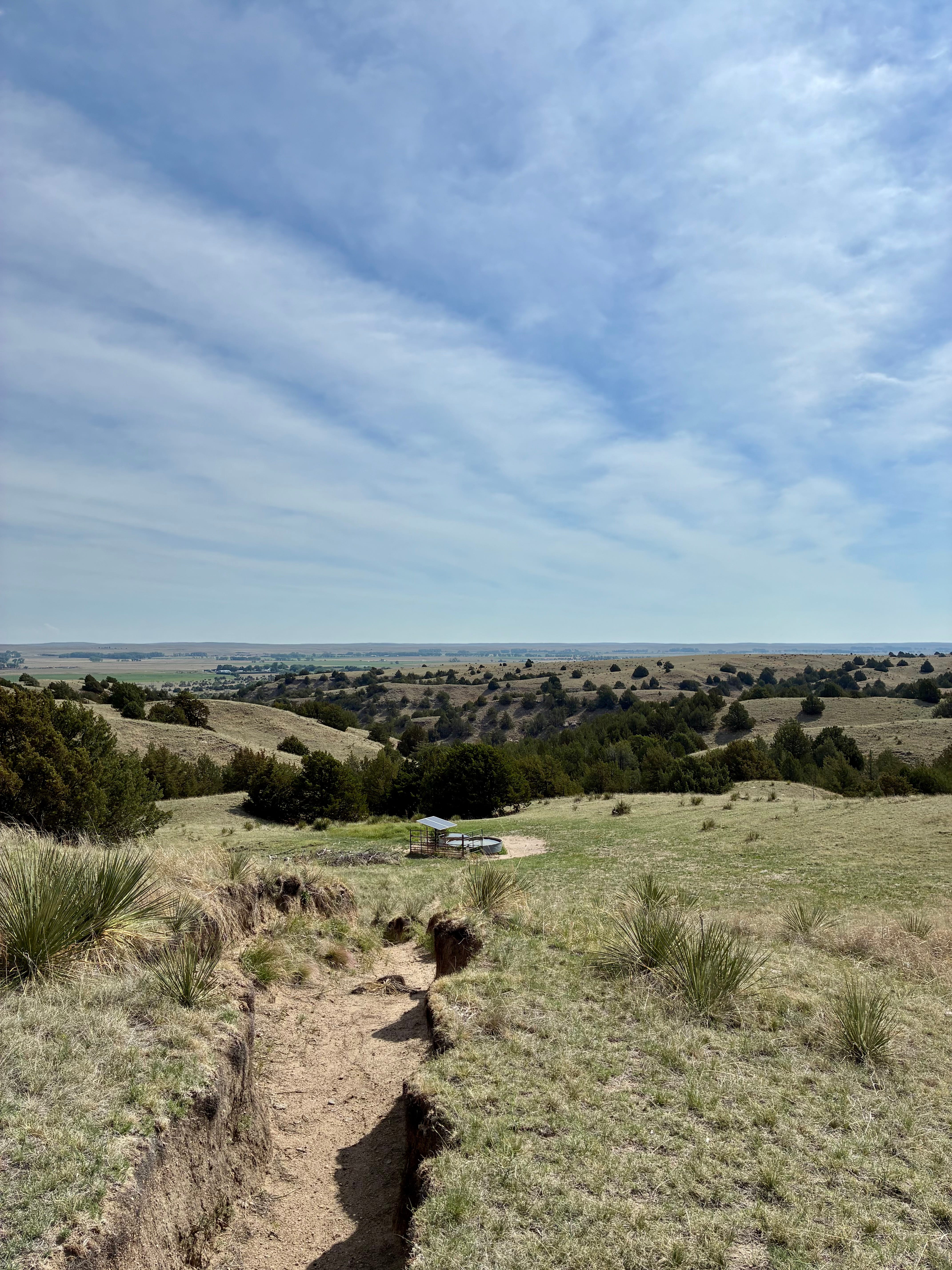
While talking with a faculty member and writer in residence at Cedar Point, Emily Rau, she noted the expansiveness of the Nebraskan prairie. It may seem like there are fields and grass forever, but if you look closely, a whole world opens up to you. Immediately, the word “oceanic” popped into my head; she had put a finger on what I was starting to sense in that place. On my first day, I was struck both literally and figuratively by the wind—it was of a strength and consistency that I felt I was on the ocean. While driving and hiking, I also noticed how the land isn’t really all that flat. Instead, there were continuous rolling hills, much like waves. I realized that I was probably thinking about Nebraska the way that other people think about the ocean when I tell them I have worked on boats. What is out there but an empty expanse? In reality, both the prairie and deep sea are teeming with life. Oddly enough, I think the strange sense of the oceanic that I had at Cedar Point is also what made the landscape feel unexpected but familiar.
Thank you to all the field stations, marine labs, and amazing people that I have met through this research, who are all helping to expand my horizons. Two more field stations to go!
Thanks for being here, and keep your eyes open for surprises in the everyday.
Jenna :)
I was not attacked by any birds, thank you very much
shoutout Hollis, Hunter, and Michelle!
very creative